Every document tells a truth that whispers could not silence.
Explore primary source materials, historical photographs, official records, and documents that provide evidence and context for Mary Mallon's story. These are the sources that inform our research.
Archive Collection
Documents scattered across time...Each piece tells a fragment of the story. Explore the evidence that history left behind.
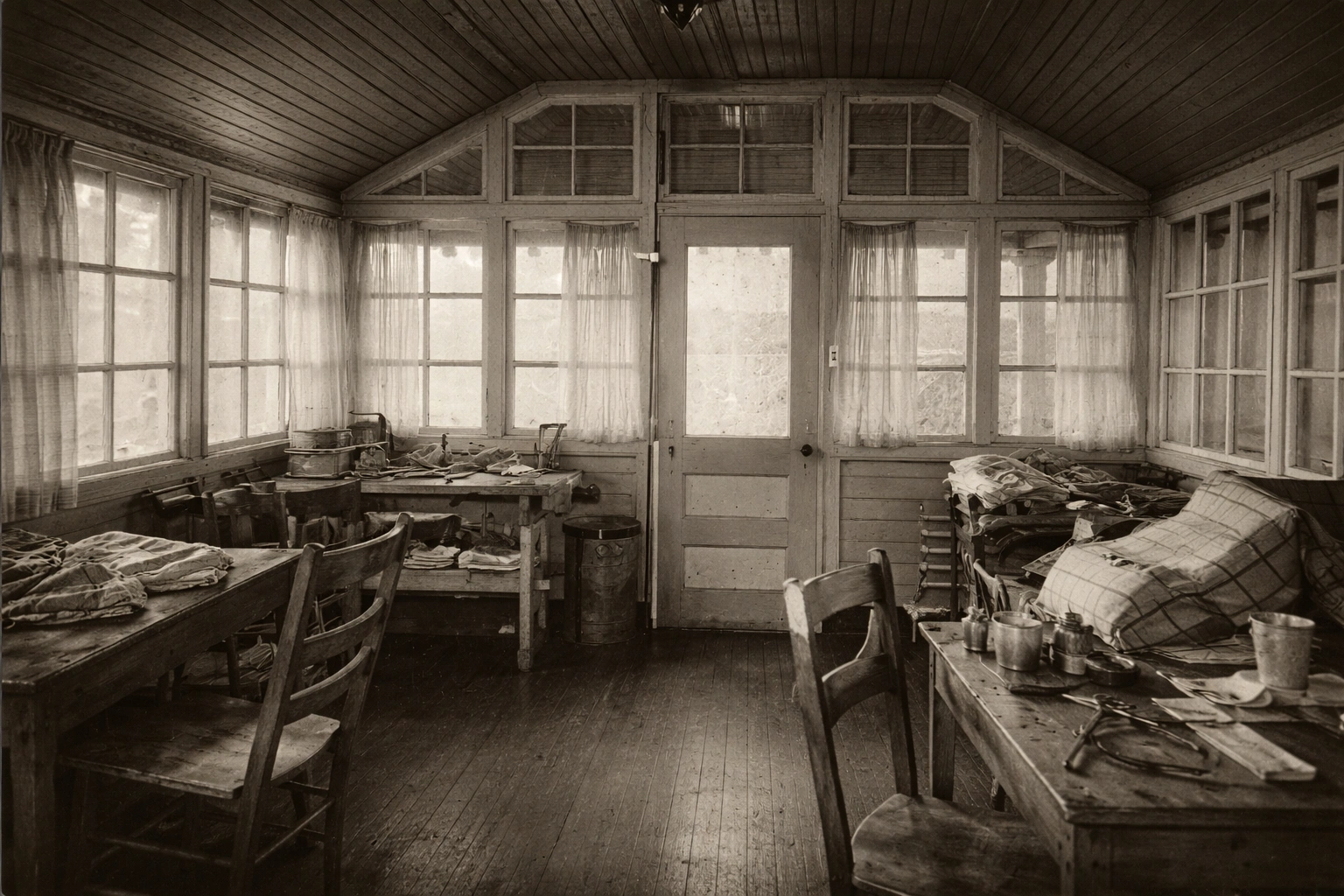
Isolation Cottage Interior — Communal Space
📅Date: Circa 1910-1915
📸Source: NYC Municipal Archives
📍Location: North Brother Island
Interior view of the communal living area in Mary Mallon's isolation cottage on North Brother Island. The photograph shows simple furnishings, hospital beds, and large windows that allowed natural light into the space where Mary spent decades of forced isolation.
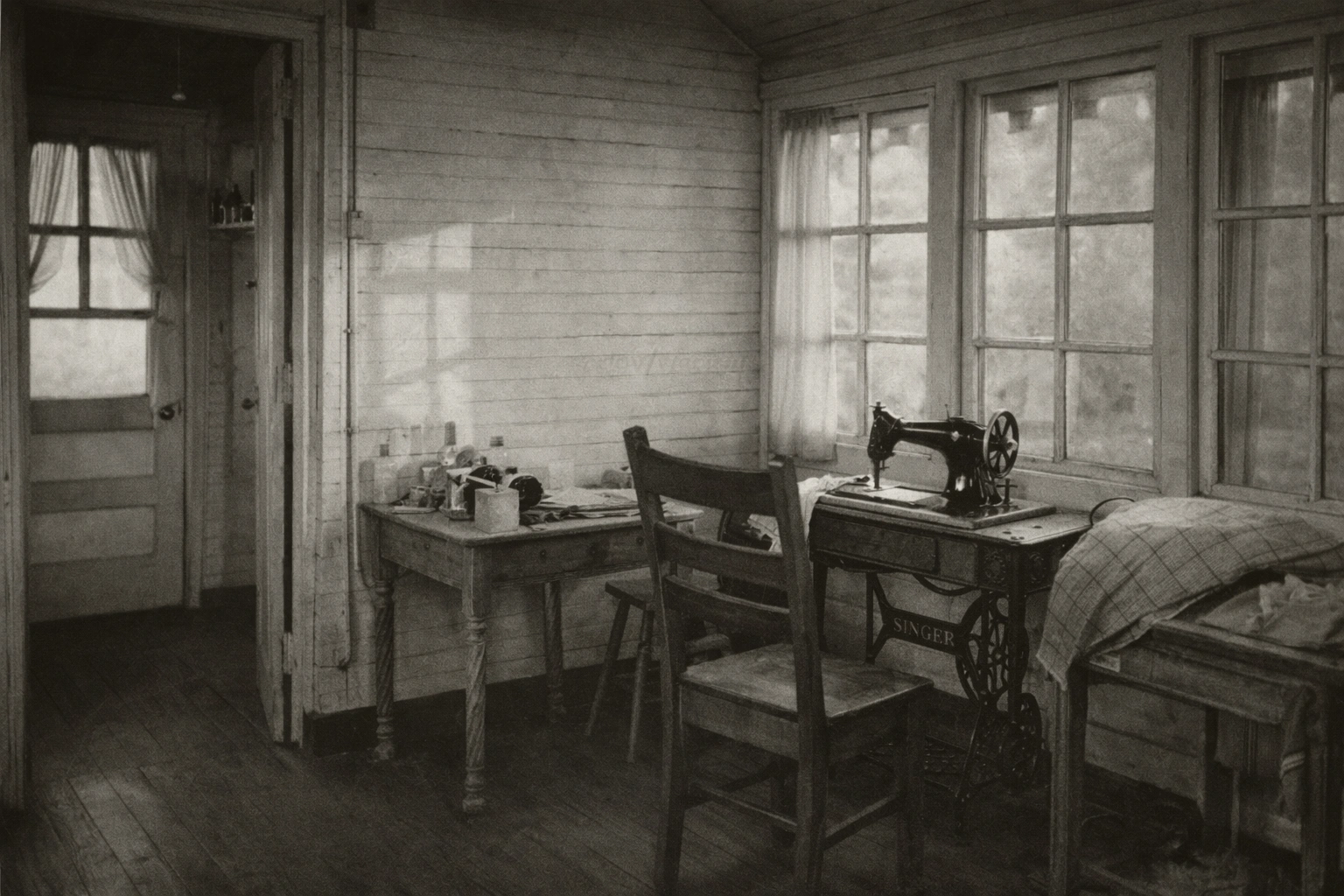
Isolation Cottage Interior — Personal Quarters
📅Date: Circa 1910-1915
📸Source: NYC Municipal Archives
📍Location: North Brother Island
Mary's personal living space showing a Singer sewing machine, simple furniture, and the modest conditions of her confinement. The sewing machine suggests she was allowed some productive activities during her isolation, though she repeatedly protested her detention and maintained her innocence.
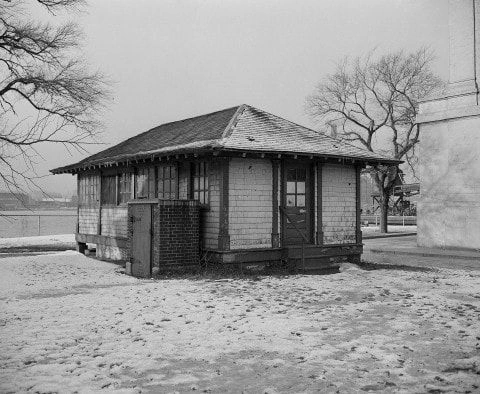
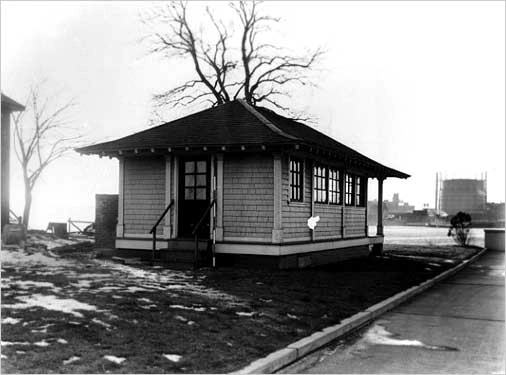
Mary Mallon's Isolation Cottage — Exterior View
📅Date: Early 1900s
📸Source: NYC Municipal Archives
📍Location: North Brother Island
Exterior view of the small wooden bungalow where Mary Mallon was forcibly detained from 1915 until her death in 1938. The cottage featured a distinctive hipped roof and wraparound windows, standing in stark isolation on the island's grounds.
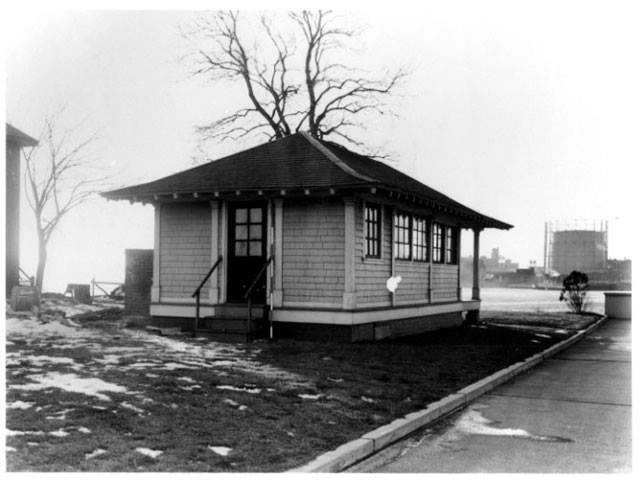
The Bungalow — Architectural Detail
📅Date: Early 1900s
📸Source: NYC Municipal Archives
📍Location: North Brother Island
Close-up view showing the architectural details of Mary's cottage, including the wood shingle siding, multiple windows, and the entrance. The structure was purpose-built as part of the Riverside Hospital complex for isolating contagious patients.
The Isolation Cottage in Context
📅Date: Circa 1915-1920
📸Source: NYC Municipal Archives
📍Location: North Brother Island
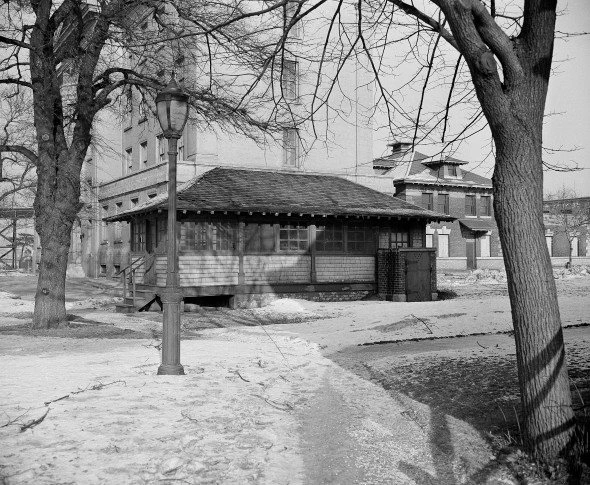
This photograph captures Mary's cottage within the broader context of North Brother Island's landscape, showing its relative isolation from other structures. The barren trees suggest this was taken during winter or early spring.
The Bungalow — Later Years
📅Date: Circa 1920s-1930s
📸Source: NYC Municipal Archives
📍Location: North Brother Island
A later photograph of the bungalow, possibly from the 1920s or 1930s during Mary's continued confinement. The structure shows signs of aging, much like Mary herself, who remained detained here until her death from pneumonia in 1938 at age 69.
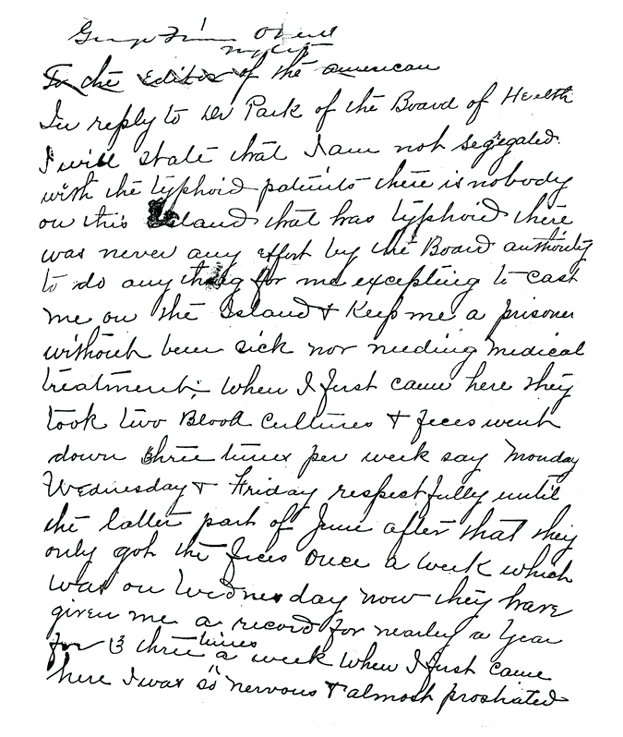
Mary Mallon's Letter of Protest, 1909
📅Date: June 1909
📋Source: NYC Municipal Archives
📍From: North Brother Island
A rare handwritten letter from Mary Mallon herself, addressed to authorities protesting her detention. In it, she maintains her innocence and argues that the typhoid bacteria found in her system does not make her responsible for spreading disease. This document provides crucial insight into Mary's own voice and perspective on her forced isolation.
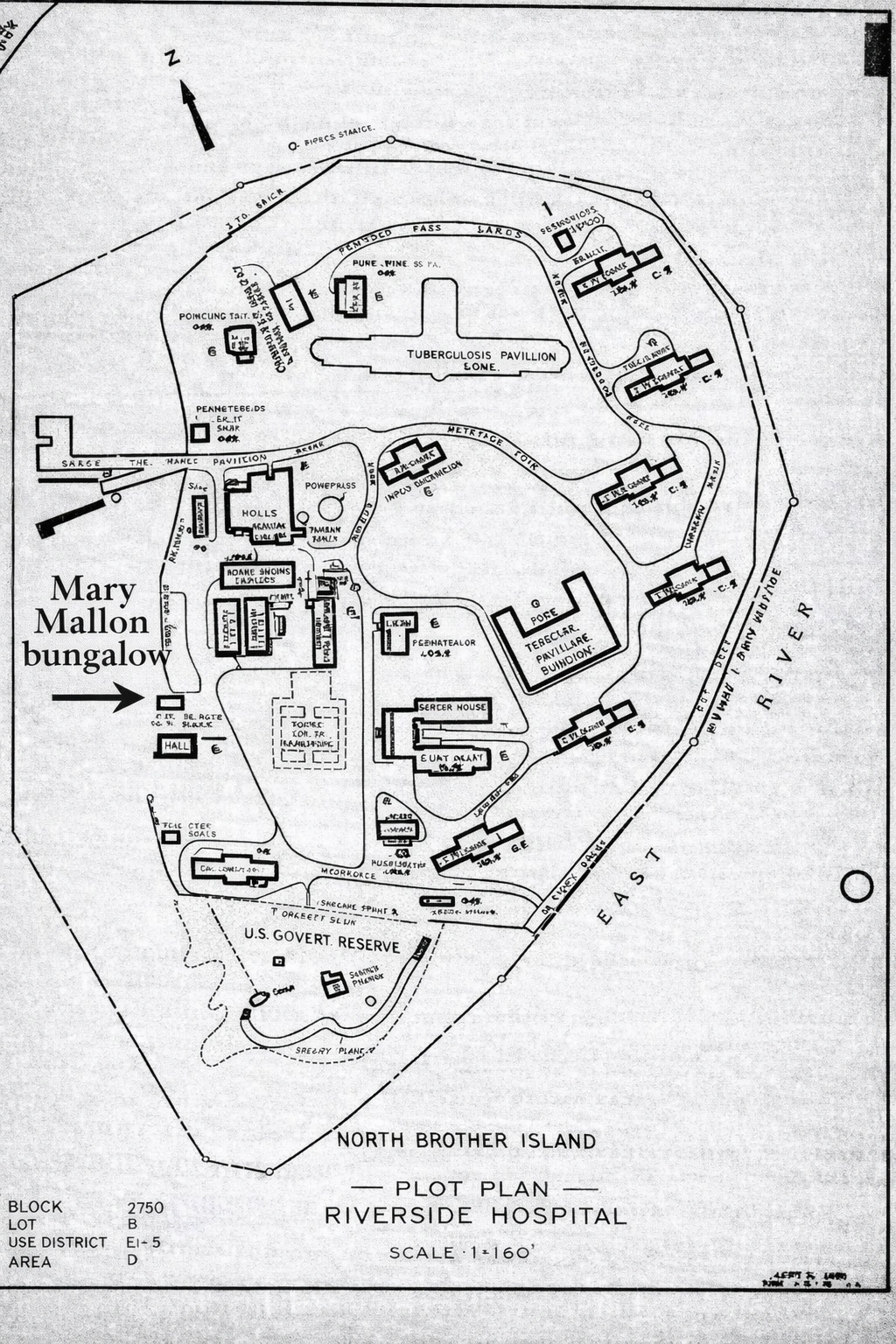
North Brother Island — Plot Plan with Mary's Bungalow
📅Date: September 25, 1935
🗺️Source: Riverside Hospital Records
📍Location: North Brother Island, East River
Official plot plan of North Brother Island's Riverside Hospital complex, with an arrow clearly marking "Mary Mallon bungalow." This map shows the isolation cottage's location relative to other hospital buildings, the tuberculosis pavilion, and the island's infrastructure. Scale 1:160.
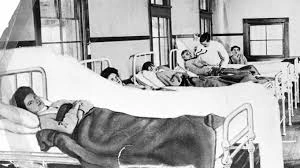
Isolation Ward Conditions
📅Date: Circa 1910s
📸Source: Medical Archives
📍Location: Isolation Hospital
Photograph documenting the conditions within early 20th-century isolation wards. Patients with infectious diseases were confined to hospital beds with minimal contact with the outside world, illustrating the stark reality of medical quarantine practices during Mary Mallon's era.
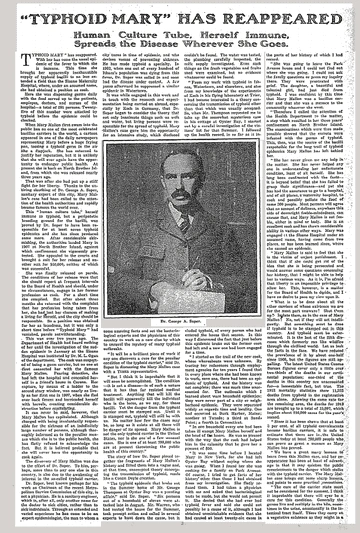
"Typhoid Mary Has Reappeared" — Newspaper Article
📅Date: April 4, 1915
📰Source: New York American
📍Location: New York City
Major newspaper coverage documenting Mary Mallon's second capture in 1915 after she was discovered working as a cook at Sloane Maternity Hospital. The article features Dr. S. Josephine Baker, who originally apprehended Mary, and details how "Typhoid Mary" had been spreading disease despite warnings. This led to her permanent detention on North Brother Island.
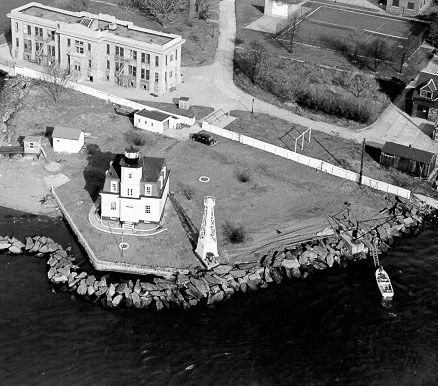
North Brother Island — Aerial View
📅Date: Mid-20th Century
📸Source: NYC Municipal Archives
📍Location: East River, Bronx
Aerial photograph showing North Brother Island's Riverside Hospital complex in its entirety. The island served as a quarantine facility for contagious diseases from 1885 to 1943. Visible are the main hospital building, lighthouse, and various support structures—somewhere among them, Mary Mallon's isolation cottage.
North Brother Island — Modern Ruins
📅Date: Late 20th/Early 21st Century
📸Source: Contemporary Photography
📍Location: North Brother Island
Contemporary photograph showing North Brother Island as it exists today—abandoned, overgrown, and reclaimed by nature. The hospital buildings stand as deteriorating ruins, a haunting reminder of the island's history as an isolation facility. The island remains closed to the public, preserving this piece of Mary Mallon's tragic legacy.
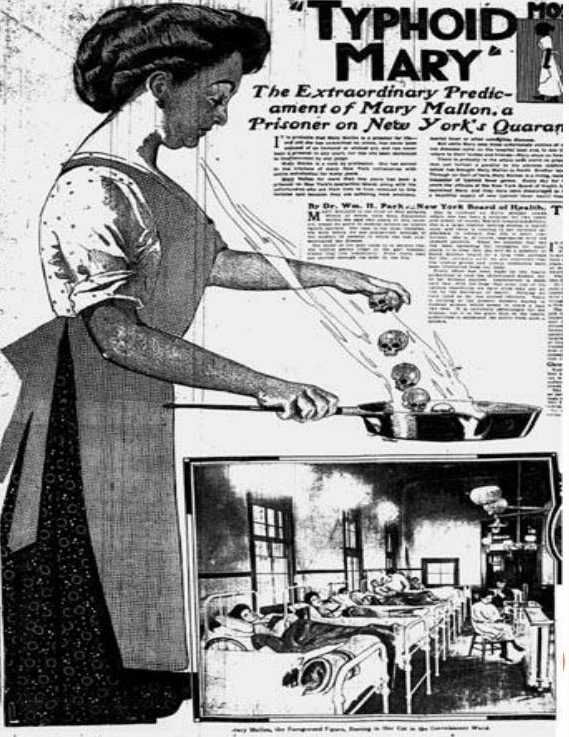
"Typhoid Mary" — 1909 Feature Article
📅Date: June 20, 1909
📰Source: New York American
📍Location: New York City
Early sensationalized newspaper coverage featuring illustrations of Mary Mallon cooking and images of the hospital ward. This article exemplifies how the press dubbed her "Typhoid Mary" and portrayed her as a menace to public health. The dramatic headline and illustrations contributed to the public perception that would follow Mary for the rest of her life.
6 of 13 sources displayed
📂
No Sources Found
No archive sources match the selected category. Please try a different filter.
❦
About These Documents
❦
Every document in this archive has been carefully authenticated and sourced from reputable institutions including the New York City Municipal Archives, Library of Congress, National Archives, and contemporary newspaper collections.
These materials provide crucial context for understanding Mary Mallon's life, the medical knowledge of her time, and the social circumstances that shaped her story. They represent primary source evidence that allows us to move beyond myth and sensationalism to examine the historical reality.
Our research prioritizes dignity and accuracy. Each document is presented with full citation information, and we have been careful to contextualize materials that reflect the prejudices or misconceptions of their era.
"
The truth lives in the documents that survived, waiting to be read with care and understanding.