Finding My Craft
Cooking saved me. When I stepped into a professional kitchen for the first time, something inside me shifted. It wasn't just work anymore — it was purpose. And for a woman who had nothing, purpose was everything.
There is a moment I return to, again and again, even now. I am perhaps fifteen years old. I am in the kitchen of a house on the Upper East Side, and I have just produced, entirely on my own, a sauce that makes the cook I work under stop mid-stride, turn around, and taste it again. She doesn't say much — women in her position didn't hand out praise easily — but she nods, once, slowly. And in that nod I understand, for the first time, that I am good at something. That I have a talent the world might actually value.
I don't think people who have always had something to offer can understand what that moment meant to me. I had come from nothing. No parents, no education, no connections, no prospects. I was an Irish immigrant girl in a city that had little use for Irish immigrant girls beyond the labor they could provide. The idea that I might have a gift — not just usefulness, but actual skill, the kind that other people recognized and respected — was almost incomprehensible to me. But the sauce was undeniable, and so was the cook's reaction.
In the kitchen, I was not an orphan. I was not poor. I was not Irish in the way that made people look through you. I was a cook — and a good one. That was enough. For a long time, it was everything.
I threw myself into learning with a seriousness that I think surprised the people around me. I watched. I asked questions when asking was permitted. I practiced techniques after my official duties were finished, using scraps and leftovers to experiment. I pestered the more experienced cooks for explanations of why things worked the way they did — why one method for reducing a sauce produced a different result than another, why the texture of pastry changed depending on how warm your hands were, why timing was as important as ingredients.
The World of Domestic Service
To understand my work, you need to understand the world I worked in. Domestic service in late nineteenth-century New York was a complex hierarchy with its own rules and social codes. At the top were the butlers and housekeepers — well-paid, relatively secure, often with years of service to the same family. Beneath them came the specialized staff: cooks, ladies' maids, coachmen. Below that, the general servants and kitchen maids who did the hardest, dirtiest work for the least pay.
I moved through this hierarchy faster than most. By my late teens, I was functioning as an assistant cook in households that employed multiple staff. By my early twenties, I was the primary cook in smaller establishments — families who kept only two or three servants, where the cook was expected to handle everything from breakfast to dinner service, from planning menus to managing the household's food budget.
The wealthy families I cooked for moved in social circles I could observe but never join — dinners, parties, visiting guests who expected the food to match the elegance of the house. I learned to cook at a level that met those expectations. French techniques, which dominated fashionable New York dining, became as natural to me as the Irish cooking I'd grown up watching. I understood the difference between cooking that fed people and cooking that impressed them, and I could do both.
What Skill Gave Me
Skill gave me things I hadn't had before and didn't know how to name at first. It gave me pride — not vanity, but the quiet satisfaction of doing something well, of knowing your work has value. It gave me independence, or the closest thing to independence available to a woman in my position. I could choose my employers, to a degree. I could leave situations that didn't suit me and find work elsewhere. That freedom was not nothing. For a woman of my class and background, it was extraordinary.
It gave me a kind of visibility that I had never experienced before. In the tenements, you were invisible. On the street, you were invisible. In most of the world, an Irish immigrant woman without family or money was essentially invisible to the people who held power. But in a kitchen, in my domain, I was seen. My employers relied on me. They noticed when I was there and when I wasn't. They recommended me to their friends. My name — Mary Mallon, the cook — meant something in the circles where I worked.
I built a reputation through twenty years of work. Not through luck or connection or birth. Through skill, through discipline, through showing up every day and doing the job better than most people could. They took that from me without a second thought.
What it could not give me, and what I did not understand until much later, was security. The kind that comes from owning property, having savings, having family with resources to fall back on. I was always one illness away from poverty, one bad employer away from unemployment, one shift in the social winds away from irrelevance. I didn't fully appreciate that fragility when I was living the good years. I do now.
The Craft Itself
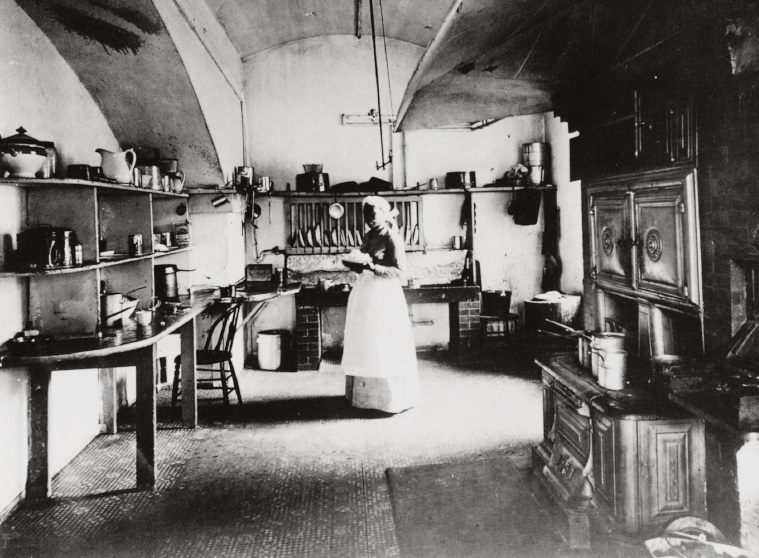
I want to talk about the food, because it gets lost in the larger story. The newspapers were never interested in what I cooked or how I cooked it — only in the idea that my cooking had made people sick. But I spent the better part of twenty years creating meals I was proud of, and that deserves to be remembered.
I was particularly known for my desserts. My peach ice cream was extraordinary — I say this without false modesty, because it was simply true, and the families I worked for told me so regularly. My rice pudding. My roast meats. I had a gift for reading what a family needed at table — when they wanted comfort, when they wanted to impress guests, when someone was ill and needed something gentle. A good cook doesn't just follow recipes. She reads the room and feeds what she finds there.
I worked in the summers, which was when the wealthier families needed cooks most urgently — moving to their country houses, entertaining guests, requiring full staff at all times. Summer work meant higher wages and the opportunity to work for multiple households across a season. I was in demand. I had a waiting list of families who wanted to hire me. That is not a boast. That is the record of a skilled professional who had earned her reputation through years of hard work.
What They Eventually Destroyed
When I think about everything that was taken from me — my freedom, my privacy, my name — what cuts deepest is the loss of the kitchen. Not just as livelihood, though that mattered enormously. As identity. As the place where I was more than an Irish immigrant girl with nothing. As the only context in my life where the world assessed me on the basis of what I could do rather than what I was.
When George Soper arrived at the door of the family I was cooking for in 1907 and told me I was dangerous, what he was really saying was: everything you have built, everything you have become, everything that makes you worth anything — that is over now. He didn't say it that way. He used the language of medicine and public health. But that was the substance of what he was delivering.
They didn't quarantine a woman who was spreading disease. They quarantined a cook. They quarantined the twenty years of skill and discipline and professional identity that I had built from nothing. And when they eventually released me and told me I could never work in food service again, they weren't just restricting my employment options. They were telling me that I had to become someone else. Someone without a craft. Someone without the thing that had saved me from the life I had been born into.
I could not do it. I don't think anyone who understood what that craft had meant to me could honestly blame me for that.