Trying to Survive
They released me and told me never to work with food again. Then they expected me to simply get on with it — to accept a life of poverty wages, notoriety, and the permanent loss of the only craft I had ever known. What they were asking was impossible. What they were offering was nothing.
When they released me from North Brother Island in February 1910, the health department gave me a list of things I must not do. I must not work as a cook. I must not prepare food for others in any capacity. I must report to health authorities regularly. I must notify them of any change in my living situation. I must cooperate with any future testing they required.
What they did not give me: a job. A means of supporting myself. Job training for an alternative career. Financial assistance during the transition. Any acknowledgment that by destroying my ability to practice my profession, they had destroyed my ability to live with any degree of security or dignity.
The health department's suggestion was that I take work as a laundress. The wages for laundry work in 1910 ran to roughly $20 per month. I had been earning $40 to $50 per month as a cook. They were asking me to accept not just new work, but the permanent abandonment of everything I had built, in exchange for wages that would barely cover rent in a city where rent had risen sharply in the years I had been confined.
They took away the one thing I was good at. The one thing that made me feel like I mattered. And then they expected me to be grateful for my freedom and get on with it. As though freedom without livelihood was something a person could live on.
I tried. I want to be clear about that, because history has not been particularly interested in being clear about it. For a period after my release, I tried to follow their rules. I took laundry work when I could find it. I reported to the health department as required. I tried to find alternative employment — as a seamstress, as a cleaning woman, in positions that didn't involve food. I tried.
The Reality of Laundry Work
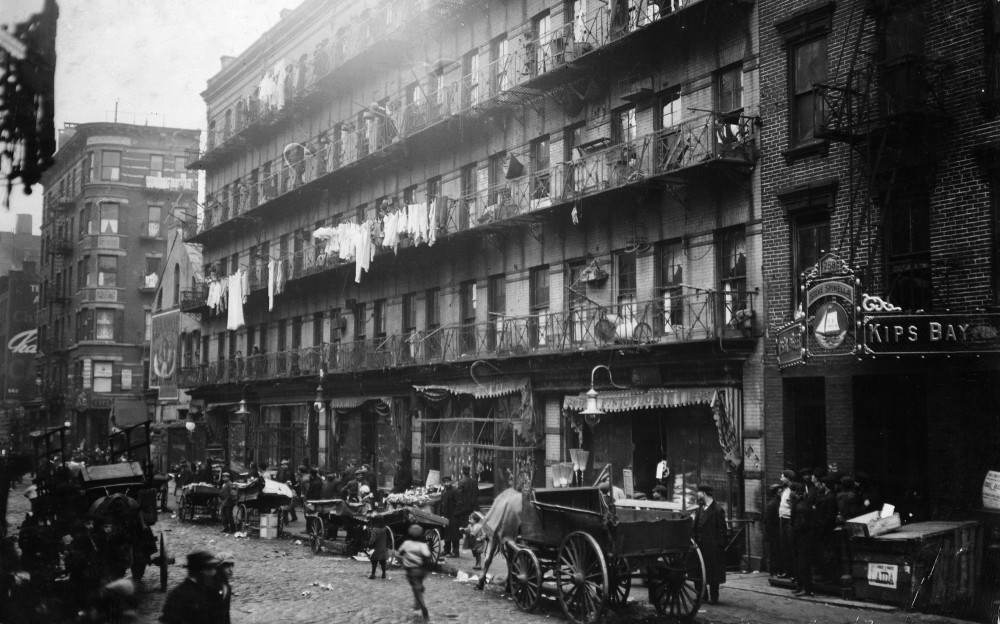
Laundry work in early twentieth-century New York was among the hardest, lowest-status, and worst-paid work available. Commercial laundries used heavy industrial equipment in buildings that were often sweltering in summer and inadequately heated in winter. The physical demands were severe — lifting, wringing, pressing, carrying — and the hours were long for wages that left little cushion.
Private laundry work — washing for individual households — paid somewhat better but was irregular and physically demanding in its own ways. You were on your feet all day in someone else's kitchen or back room, handling other people's dirty clothes, breathing the steam from hot tubs, wearing your hands raw on washboards. It was not work I despised — I had done harder things than this. But it was work that paid half what I had earned before, with no prospect of advancement, in conditions that were a profound step down from the skilled professional kitchen work I had spent my life mastering.
My hands — which had learned the precise textures of pastry, the temperature of a perfect sauce, the resistance of well-rested dough — became raw and cracked from handling lye soap and hot water. There is something particularly cruel about this detail that I don't think requires explanation. The tools of my old craft had been my most valuable professional assets. Their destruction by the tools of my new, imposed one felt like deliberate humiliation, though I know it was simply circumstance.
The Problem of Being "Typhoid Mary"
My name was known. That was the other catastrophe of those years, beyond the immediate economic hardship. The newspapers had published my name and, in some cases, my photograph in connection with the "Typhoid Mary" story. I was not anonymous in the way that other women in my position might have been. I carried my notoriety wherever I went.
Potential employers who recognized my name — and some did — saw liability rather than a capable worker. Even in positions completely unrelated to food preparation, the stigma of being a known typhoid carrier was enough to close doors. I applied for work as a hotel maid. The manager's expression when he recognized my name told me everything before he spoke. I applied for work as a seamstress and was told the position had been filled, then watched it advertised in the same newspaper two days later.
I had no recourse. There was no process for appealing the public destruction of my reputation. There was no legal protection against discrimination based on my status as a carrier — a status that had been determined by medical tests taken without my proper consent, publicized without my permission, and used to justify my imprisonment without my legal defense. The system that had created my notoriety offered no remedy for its consequences.
Every legitimate avenue had been closed to me. Not through my own choices, but through theirs. When you take away everything a person has and offer nothing in return, you don't get to be surprised by what they do next.
The Return of Poverty
By 1912 or 1913, I was in genuine financial difficulty again. Not the absolute poverty of my childhood — I was not starving — but the grinding, daily precariousness of a woman who cannot make her wages cover her expenses. Rent, food, clothing: these required constant calculation. I was always one unexpected expense away from crisis.
John Breihof, my companion, was working, but his income was not sufficient for both of us, and I had spent too many years being self-sufficient to find that situation tolerable. I am not built for dependence. I had built my entire adult identity on the proposition that I could support myself through my own work, that I needed no one's charity. To find myself edging toward exactly that position — through no fault of my own, as a direct consequence of what the health department had done to me — was a kind of daily torment that I don't think anyone who hasn't experienced it can fully imagine.
The Decision
I returned to cooking. I want to say that plainly, without apology and without excessive self-justification, because both responses would be inadequate to the reality. I returned to cooking because I was a cook, because it was the only work I could do that paid a living wage, and because every other avenue had been closed to me by a combination of public notoriety and the simple economic facts of my situation.
I used a different name. "Mary Brown" — not an imaginative alias, but sufficient for my purposes. I found work in restaurants and hotels, establishments larger and less personal than the private households I had worked for before, where my face was less likely to be recognized and my history less likely to be known.
I knew the risk. I am not going to pretend otherwise. I understood that there was a possibility — however remote it felt, given that I had never felt ill — that my food preparation might transmit disease to others. I did not dismiss that possibility. I minimized it with scrupulous hand-washing and hygiene practices. But I did not refuse it entirely.
Was that wrong? I have thought about it for years. The question of whether my choice to cook again was morally defensible is one I do not resolve easily or finally. What I know is this: the people who forced me into that choice — by taking my livelihood and offering me nothing viable in return — were not asking me to weigh my survival against nothing. They were asking me to accept destitution and dependency so that they would be absolved of the responsibility of managing my situation more humanely. I refused to bear the entire weight of that calculus alone. And I do not think they had the right to ask me to.